Hutton 300: the concert

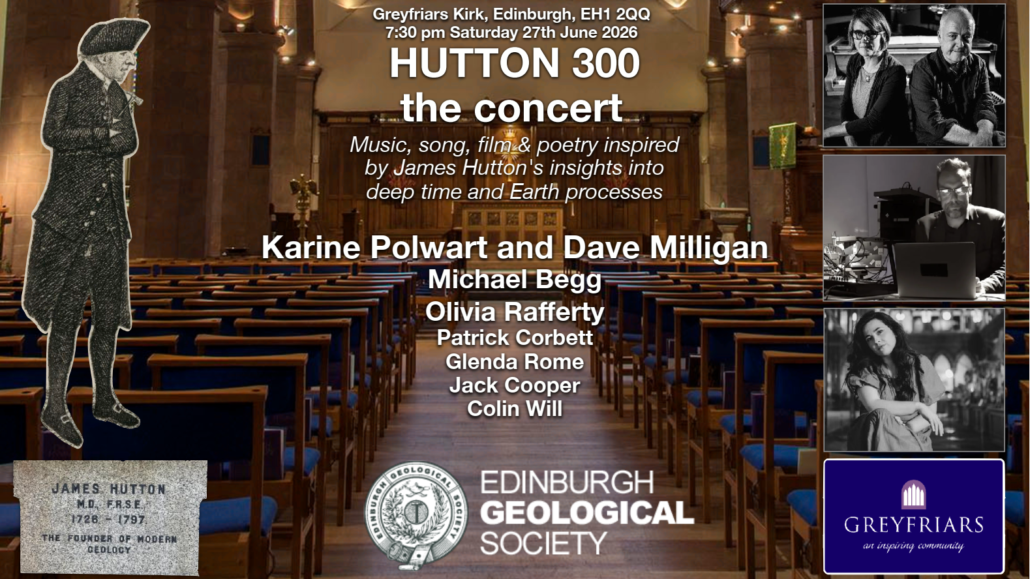
Greyfriars Kirk, Greyfriars Place, Edinburgh, EH1 2QQ
Saturday 27 June 2026, 7:30pm

Join us for a unique evening of music, song, video and poetry inspired by James Hutton’s insights regarding deep time and Earth’s processes with performances from leading Scottish performers. Karine Polwart and Dave Milligan have featured the song ‘Siccar Point’ on their most recent album and will close the concert with a headline set inspired by the Earth. Olivia Rafferty will sing songs from her album ‘Typical Forever’ which is entirely about geology. East Lothian ambient composer Michael Begg’s work includes Deep Time and accompanies atmospheric video from Glenda Rome which will also be shown as excerpts from the film ‘Expressing the Earth’. There will be poetry featuring Siccar Point and Arthur’s Seat by Patrick Corbett, Jack Cooper, Colin Will and Alexander McCall Smith.

Produced by the Edinburgh Geological Society.

Tickets (£25 + booking fee) – book here

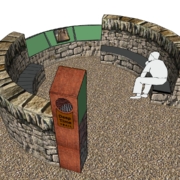
For those interested in exploring Hutton connections even further, visit the Hutton memorial in Greyfriars Kirkyard before the concert (from 6pm) and join us the next morning for:

Geopoets tour to Siccar Point 

Join the creative team involved in the Hutton 300 concert for a coach tour to Siccar Point, to explore the new Deep Time Trail and creative responses to James Hutton’s ideas.

Sunday 28 June 2026
09:30 Depart Edinburgh city centre
10:45 Arrive Siccar Point (or meet us there if you are travelling independently)
12:00 Depart Siccar Point for Cockburnspath (refreshments/toilets)
12:45 Depart Cockburnspath
14:00 Drop off Edinburgh city centre

Coach tickets (£20 + booking fee) – book here

Clough Lecture 2026

Clough Medal lecture 2026

On 25th February 2026 at 7pm, the annual Clough Medal lecture took place at the Grant Institute, Kings Buildings Campus, University of Edinburgh and also held online. The audience for this years’ lecture was again sizable, both physically present and on-line.  Proceedings for the evening were chaired by Graham Leslie (Chair of the Clough Committee, Edinburgh Geological Society).

Graham explained that the Clough Medal was established in 1935 and is given each year to a geologist whose original work has materially increased the knowledge of the geology of Scotland and/or the north of England, or one working in Scotland or the north of England who has significantly advanced the knowledge of any aspect of geology.

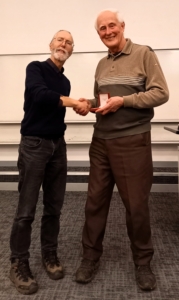
The medallist for 2025/26 was Professor Katriona Edlmann (Professor in Sustainable Energy, University of Edinburgh), who gave a lecture entitled “The Role of Scotland’s Geology in the Energy Transition”.  Beforehand, she was presented with her medal by Professor Mark Wilkinson, EGS President.

Clough Lecture 2026

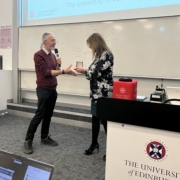
Katriona (right) being presented with his Clough Medal 2025 by Mark, our President

Katriona used her lecture to cover the background to a Carbon based energy system, starting around the 12th Century with the monks in Midlothian through to 2002 when the Longannet deep mine in Fife closed.  Running along side this in the 20th century were the Oil Shale and Shale Oil extractions from the Lower Carboniferous rocks up to the 1960s, especially around Bathgate in the Central Belt of Scotland.

In 1960, the first gas and then oil was discovered in the North Sea, initially in the Norwegian Sector but shortly after in UK waters as well.  The oil fields being discovered mainly in the northern part of the North Sea and gas fields in the southern part.

There were so brief sojourns into shale gas, initially brought on by a resource evaluation undertaken by the British Geological Survey in 2014.  The ‘false dawn’ was short lived, and led to a moratorium being put in place in Scotland in 2019.

Katriona then moved onto the main part of her lecture around the various options for future energy and the role that Scotland’s geology could play in each.  The four areas covered were i) Carbon Capture and Underground Storage (CCUS), ii) Hydrogen Storage, ii) Geothermal and iv) Nuclear.

Under CCUS we heard about the re-purposing of the North Sea Oil and Gas fields where existing infrastructure will be re-used, mostly likely for the ACORN project in NE Scotland.  There was also mention of the potential for basalt to hold CO2, although at this stage a more tentative technology.

The H2 storage is in part a response as to what to do with excess windfarm energy and its conversion to a source that is capable of being stored. The Salt Caverns within the P-T formations are already used and re-purposed gas fields may also have big potential in the near future.  The potential for a complete off-shore industry using oil and gas platforms is a strong possibility.

Geothermal is something which has long been known about and with the real kick-off of the deep drilling programme in SW England has shown that it an work.  In Scotland, we have both hot granite intrusions which may bring potential in parts of the NE around Aberdeen, and also the legacy mine workings under the Central Belt of Scotland and into Fife.

Nuclear has had a long history in Scotland, although currently only Torness in East Lothian is the only remaining operation station. Currently the Scottish Government has a moratorium on new power stations here.

A lively Q&A session followed with Katriona responding to questions on natural sources of hydrogen, the re-commencing interest in blending natural gas and hydrogen for domestic homes, salt carvern locations – why not in Scotland, and finally the use of tidal power resources. Katriona demonstrated a fantastic knowledge on all these sustainable energies, which she and her team of researchers from the University of Edinburgh had investigated for various governmental departments both in Scotland and the wider UK.

The vote of thanks was given by Mark Wilkinson who said that Katriona was a fantastic colleague to have alongside in Edinburgh and that she was forever turning up new ideas to be investigated.  We look forward to hearing from her again soon, as the next chapter of Scotland (and the UK’s) energy transition story continues.

If Members weren’t able to attend physically or virtually, a recording is available on YouTube.

Edinburgh film premiere: As Old As The Hills

EGS is delighted to present the Edinburgh premiere screening of the film As Old As The Hills – made for the Orkney Science Festival. The film is timely – the celebrations of the 300th anniversary of the birth of James Hutton, the father of modern geology, start in June.

Slovenian filmmaker, Selena S. Kuzman, takes us on an epic scenic journey through Caithness and Orkney, with magnificent drone footage. Along the way, presenters Mara Gibb and Katy Firth use quirky timelines and models to help the viewer to grasp the immensity of Deep Time. As Old As has been described as the ultimate slow movie.

Edinburgh geomorphologist, Adrian Hall, wrote the script. We find that rock hills have half-lives of tens or even hundreds of millions of years. But soft hills, like sand dunes and glacial drumlins, appear and disappear over thousands of years. Watch out for the final Da Vinci code twist supplied by renowned Orkney storyteller, Tom Muir.

Selena Kuzman and Adrian Hall will be available after the showing for a Q&A session about the making of the film.

DATE: Wednesday 18 March 2026, 7:00pm

VENUE: Lecture Theatre G01 – Lister Learning and Teaching Centre, 5 Roxburgh Place, Edinburgh, EH8 9SU

FREE, BOOKING ESSENTIAL

Building the Deep Time Trail

We are delighted to confirm that the Deep Time Trail at Siccar Point will be constructed this spring. We have raised over £150,000 through a combination of the Scottish Geology Trust’s Deep Time Trail crowdfunder and a grant from the Cockburnspath & Cove Community Fund.
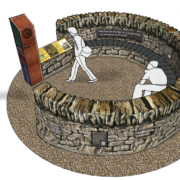
Our planning application has just been approved by Scottish Borders Council (25/01557/FUL) and contractors have been appointed to do the work, managed by CMC Associates.

Construction of the Deep Time Trail will start at the beginning of March 2026, and be completed in time for the official opening and Open Weekend 30-31 May (all welcome!).

This major project, led by the Edinburgh Geological Society, is one of our contributions to the celebrations of the James Hutton’s Tercentenary. Born in Edinburgh on 3 June 1726, James Hutton is known as the ‘Father of Geology’ and the angular unconformity at Siccar Point is the most famous site discovered by Hutton – some say the most important geological site in the world.

You can find out more about James Hutton, the Tercentenary and the Deep Time Trail at james-hutton.org.

Support the building of the Deep Time Trail at Siccar Point

The Scottish Geology Trust have launched a Crowdfunder to raise funds to install a Deep Time Trail at Siccar Point.

www.crowdfunder.co.uk/p/siccar-point

At present, visitors to Siccar Point are presented with a poorly-defined path and a small info-board; we believe that such a historically important site, and its visitors, deserve better. To that end, the Edinburgh Geological Society is working with the Scottish Geology Trust and the James Hutton Institute to install a Deep Time Trail at the site, in time to celebrate Hutton’s Tercentenary in June 2026.

The Crowdfunder is aiming to raise at least £75,000, which is around half of the costs of installing the trail. Ideally, we will exceed this goal, allowing us to kick-start the subsequent phases of work at Siccar Point, with a long-term view to installing steps down the steep slope and making the unconformity more safely accessible.

The Scottish Geology Trust, Edinburgh Geological Society and The James Hutton Institute are launching a fundraising campaign to develop a ‘Deep Time Trail’ at Siccar Point. This public trail will celebrate the 300th anniversary of the birth of James Hutton in 2026, allowing access to this internationally important site.

The campaign offers a variety of unique rewards to thank donors for their support, including beautiful facsimile copies of Hutton’s 29 ‘Lost Drawings’. These were designed to be included in volumes of Hutton’s Theory of the Earth, but remained unpublished. They were rediscovered in 1968 and provide a remarkable visual record of Hutton’s theory and his understanding of the geology of Scotland.

Please donate: click here for more information www.crowdfunder.co.uk/p/siccar-point


Introducing James Hutton – public event

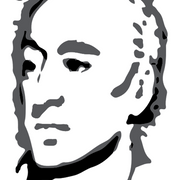
Join us at this public event to launch the James Hutton Tercentenary celebrations. James Hutton (1726-1797) is widely acknowledged as the Father of modern geology.

Clough Medal Lecture 2024-25

Mike (right) being presented with his Clough Medal 2024 by Mark, our President

On 26 February 2025 our annual Clough Medal lecture took place at the Grant Institute, Kings Buildings Campus, University of Edinburgh and also held online. The audience for this year’s lecture was again sizable, both physically present and on-line.  Proceedings for the evening were chaired by Alastair Milne, Lectures Secretary.

Our president, Mark Wilkinson, explained that the Clough Medal was established in 1935 and is given each year to a person whose original work has materially increased the knowledge of the geology of Scotland and/or the north of England, or one working in Scotland or the north of England who has significantly advanced the knowledge of any aspect of geology.

The medallist for 2024/25 was Mike AE Browne (formerly BGS Edinburgh) who gave a lecture entitled “Geoconservation in Scotland”.  Beforehand, he was presented with his medal by Mark Wilkinson.

Mike used his lecture to cover the full breadth of activities around Geoconservation in Scotland, that he (& others – David McAdam, Elspeth Urquhart, Clifton Porteous, Victor Patridge, John Sheldon and Archie Miller to name but a few) had been involved over the last few decades.  His introductory slide provided a summary of his talk: i) Useful Carboniferous Stratigraphy; ii) Beginnings of Scottish Geoconservation; iii) International Conservation Accolades; iv) National Designations: SSSIs; v) Regional Accolades; vi) Local Geodiversity Sites (LGS) System and vii) Possible New Conservation Sites. In virtually all aspects, Mike has made a valuable contribution and been a leading light in many for over 50 years.

Mike estimated that he had spent roughly even split of his time on the Devonian and Carboniferous strata. This is reflected in his co-authorship of the relevant chapters of both the 4th and 5th editions of “The Geology of Scotland”. He has worked on both national and local government projects, particularly in connection with geothermal energy where his work over many years continues to form an important reference source.  He has been committed to education, having supervised a number of PhD students, and to the promotion of geology to the wider community.  He has also been the Chair of GeoConservation UK for a number of years and continues to Chair Lothian and Borders GeoConservation.

Mike has also made a valuable contribution to the EGS, having been first elected to Council in 1986, he has served as a Vice-President on three separate occasions, was our acting President in 2022-23 and Assistant Secretary (Geoconservation) from 2017 to present.

The vote of thanks was given by Alastair Milne who said that geoconservation requires work and which Mike had demonstrated in spade loads. He said that we all need to be inspired by Mike’s work.  Finally, Mike made a plea to everyone to take more photos of geoconservation sites and to share them with the relevant bodies, for instance through the Scottish Geology Trust’s Geosites project.

If Members weren’t able to attend physically or virtually, a recording of Mike’s lecture is now available on our YouTube channel.

Beach Explorers at the Edinburgh Science Festival

Tuesday 15th / Wednesday 16th / Thursday 17th / Friday 18th April 2025, 10am to 1pm

Join geologists from the Edinburgh Geological Society exploring geology on local beaches.

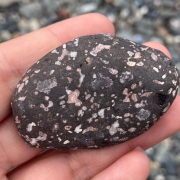
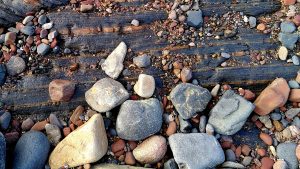
Find out about the stories hidden under our feet and in every pebble. We’ll discover an amazing variety of different pebbles, find out where they come from and what they tell us about Scotland’s geology.

Please dress for the weather. Warm clothing and strong footwear advised. Events take place close to access points but you may need to walk up to 100 metres on sand or pebbles and negotiate ramps or steps. Children must be accompanied by an adult and all participants require a free ticket.

Tuesday 15th April, 10am to 1pm: Wardie Bay – book here
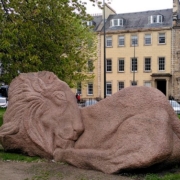
Meet on the beach east of the Granton Harbour breakwater, Lower Granton Road, Wardie, EH5 1BS
what3words.com/adding.hood.rocks

Wednesday 16th April, 10am to 1pm: Joppa, Portobello – book here
Meet on the beach beside the pumping station, Esplanade Terrace, Joppa EH15 2ES what3words.com/chill.sport.marble

Thursday 17th April, 10am to 1pm: White Sands Beach, East Lothian – book here
meet on the beach at the east end of White Sands, 4km east of Dunbar, reached by a narrow road located off the A1087. Nearest postcode EH42 1RU what3words.com/booklets.geology.sloping

Friday 18th April, 10am to 1pm: Seafield Beach, Kirkcaldy – book here
meet on the beach near Seafield Tower, 1km south along Fife Coastal Path from car park at Seafield Road, Kirkcaldy KY1 1PE. Car park what3words.com/matter.sorry.amber Event location what3words.com/globe.submit.puddles.


Event locations

New leaflet added to the impressive collection produced by Lothian and Borders GeoConservation

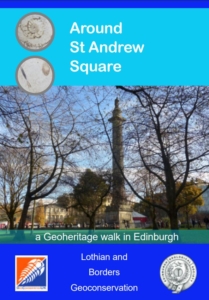
The Lothian and Borders GeoConservation volunteer group are delighted to launch a new leaflet on the buildings in the the eastern part of Edinburgh’s First New Town. Around St Andrew Square has been written by Andrew McMillan, and demonstrates the geology preserved in the largely sandstone masonry of a selection of neoclassical buildings and monuments around St Andrew Square. These buildings were constructed in the late 18th and early 19th century. Imported rock types (largely igneous and metamorphic) employed in more recent architecture also feature. Richly illustrated by many photos by Andrew and Mike Browne, and laid out in an attractive format by Barry Tymon, this is a fantastic new addition to the suite of leaflets produced by the group.
You can download the leaflet or order a printed copy from the Geoconservation leaflets page.

This is the 36th leaflet produced by Lothian and Borders Geoconservation, an incredible volunteer effort over the last 20 years. All these leaflets are available as pdf downloads, and most are also available as a printed version for a small fee. If you appreciate the effort that has gone in to produce these resources, or have any feedback or suggestions, please Contact Us. And new volunteers to join the group are always welcome!

Fellows’ Night 2024 – No. 191!

Fellows’ Night 2024

On 11th December 2024, the Edinburgh Geological Society held its 191st Fellows’ Night at the Grant Institute, University of Edinburgh. This meeting takes place each year, close to the anniversary of the foundation of the Society (on 6th December).

The Cockburn Museum, and close by lecture rooms provided the backdrop for a fun and lively event comprising a series of short talks which were given by members, and with time in between to enjoy some nibbles and refreshments.

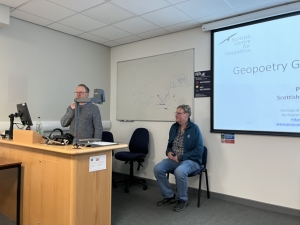
Our host for this in-person event was Angus Miller (our Promotion Coordinator).  Three speakers were lined up for this event with varied topics from Geopoetry, the history of Oil Exploration in Scotland and the Brora Sandstone/Scottish land mass evolution.

Our first speaker was Patrick Corbett (Emeritus Prof of Petroleum Geology at Heriot Watt University).  He explained what the term Geopoetry was and its origins, and updated us on the sad passing away of its founder Kenneth White from Fairlie in 2023.  He explained how a conference had been held in Burlington House (HQ of the Geological Society of London) – a first for the esteemed organisation.  A proceeding of this event is due to be published in the new year.  Patrick also read a poem about Isle of Luing, written on piece of slate from the island in the Firth of Lorn.

Second up was Simeon Brown (a former oil industry geologist who has work in both Africa and in various European countries), and who had kindly offered to talk through the development of the oil industry in Scotland since 1850.  From the first observed seeps at St Katherine’s “Balm” Well, in Liberton through to the extensive extraction of oil shales near Livingstone (and their legacy waste piles of the Bings).  He then covered the onshore “nodding donkeys” wells and more recently the Coal Bed Methane pilot site near Airth between 2008-15. A fascinating picture was outlined and set against a consideration of climate change through the same period – alongside recent volcanic eruptions which may also have played a part (and which has been captured by Turner’s paintings and Icelandic proverb which he shared).

Thirdly, Mark Williamson (EGS President and Professor of GeoEnergy at the University of Edinburgh) described his regular geological visits with undergraduate students to the Jurassic age Brora Sandstone Formation outcrops around Helmsdale, Northeast Scotland. These sequences are model for the North Sea and with the dynamic coastal processes regularly providing new things to see.  One such find was of a series of pebbles in the sandstone and their origin has lead Mark on an investigation of possible sources for this fluvial derived material.  He hypothesised that its origin may be from the outcrops on the South side of Moray Firth, meaning that in order for this to be emplaced, then the land mass to the south must have been shedding material all across the area which is now the Moray Firth marine environment.  Hence, the shoreline of Nor Scotland may not have been quite so static as others, including Prof John Judd FGS might have thought.

In conclusion, Angus said that as with all good Fellows’ Nights we had ranged extensively across the various topics but that all had strange inter-linkages reflecting how geology informs all aspects of our lives.  We finished off the evening with a vote of thanks to the speakers and also, to Bob Gatliff (former EGS President) who had so kindly done the food and drink shopping for another year.

We look forward to many more Fellows’ Nights like this in the future.

Merry Christmas and a Happy New Year.