
Clough Medal Lecture – Sideways views of Scottish Garnets: Insights into Metamorphic Processes
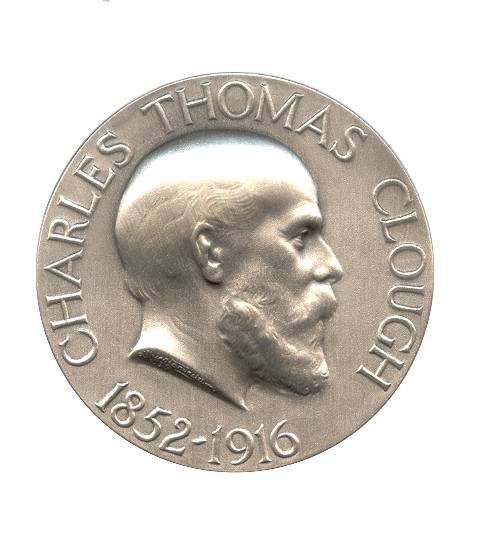
The Clough Medal is presented annually to a geologist whose original work has materially increased the knowledge of the geology of Scotland and/or the North of England, alternatively someone who is Scottish and has significantly advanced the knowledge of any aspect of geology. Find out more about Charles T Clough.
This year’s recipient is Dr Tim Dempster from the University of Glasgow School of Geographical & Earth Sciences in recognition of the exceptional contributions he has made to advancing the understanding of the geology of Scotland, particularly the metamorphic geology of the Highlands, where he has employed a wide range of technologies to better understand the processes; and his work as a dedicated and popular teacher of undergraduate students, using the Highlands of Scotland as a ‘natural laboratory’.
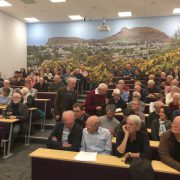
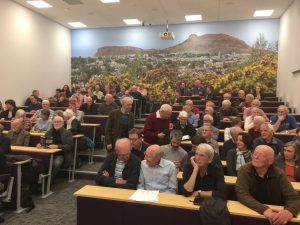
In this joint lecture with the Geological Society of Glasgow Dr Dempster talked about garnets, the workhorse of metamorphic petrologists.
Being capable of recording original compositions during growth, garnets allow determination of pressure-temperature paths and durations of metamorphic events.
Concentrating on the contact zone between the garnet and its surrounding minerals, a 3D image of the garnet rather than a thin section – which would offer too small an area for clear analysis – was created. Then the team projected a ‘map’ of the adjacent minerals on the garnet’s surface and variations in its chemistry, e.g. the Calcium content, were recorded.
This way of analysing the garnet showed that the crystal’s growth itself can change the chemistry of the surrounding matrix and hence the reaction path during growth, leading to a ‘false’ temperature recording. Dr Dempster’s studies of garnets from the Scottish Highlands therefore question some key concepts of metamorphic equilibrium.
Background reading: Dempster, T. J., La Piazza, J., Taylor, A. G., Beaudoin, N. and Chung, P. (2017) Chemical and textural equilibration of garnet during amphibolitefacies metamorphism: The influence of coupled dissolution-reprecipitation. Journal of Metamorphic Geology, 35, 1111-1130.

 The Central Scotland Regional Group of the Geological Society organises regular events at various locations in Glasgow and Edinburgh. All event details are available on
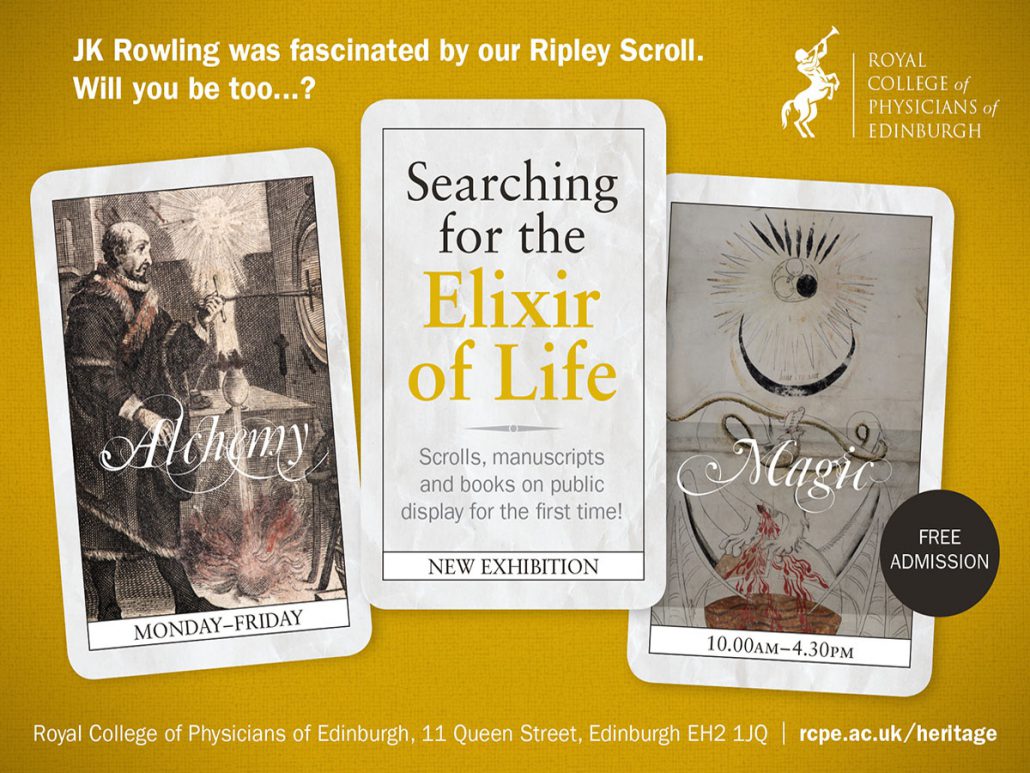 The Royal College of Physicians of Edinburgh is revealing the secrets to finding the Philosophers’ Stone, as part of its new public exhibition – Searching for the Elixir of Life: The mysteries and legacies of Alchemy – which looks at the ancient tradition of alchemy that stretches back thousands of years and was a mysterious early version of science and spiritualism. This is the first time in 337 years that the college’s fascinating collection of alchemical books and manuscripts has been put on public exhibition. The display will include the College’s Ripley Scroll – one of only 23 surviving copies anywhere in the world, and the only one in Scotland. The scroll uses symbols and illustrations to reveal the steps needed to create the Philosophers’ Stone.

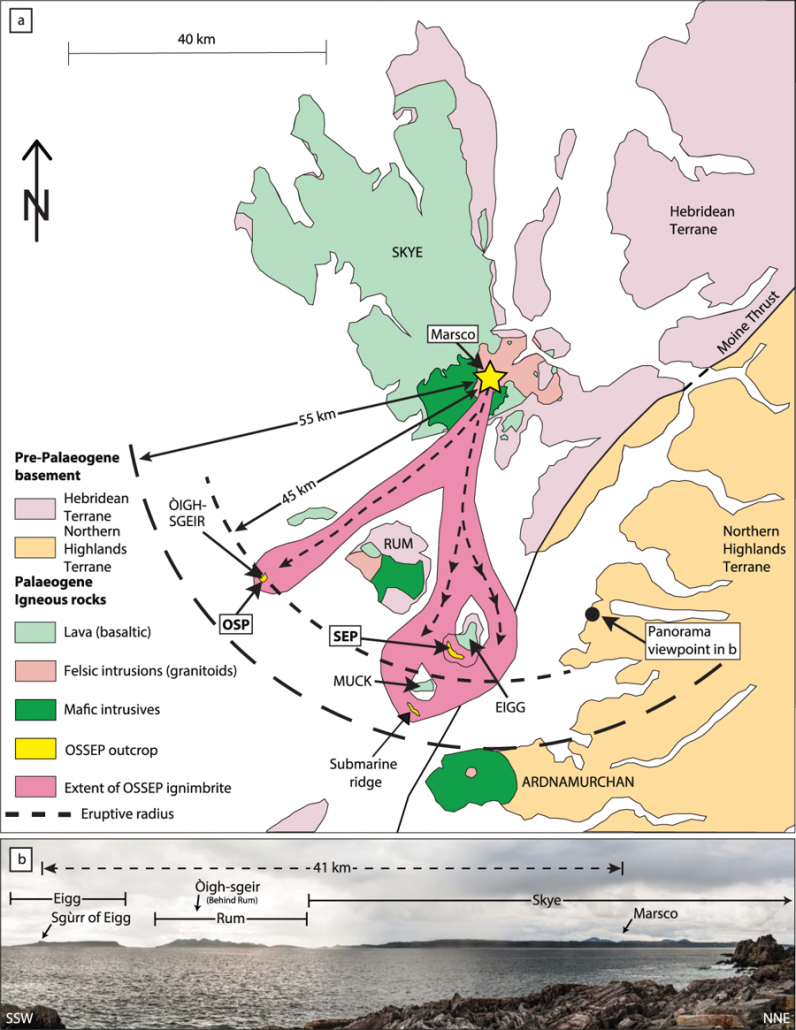
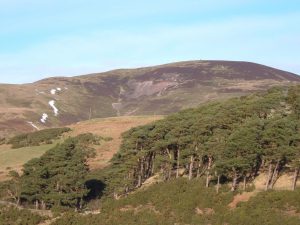 Join Victor Partridge from Forestry and Natural Heritage at the City of Edinburgh Council for this guided geology walk: From Fire and Ice. Come and find out how the Pentland Hills were created from volcanoes and glaciers on a moderate low-level 7 mile walk.
