
Exploring and explaining the geology of Blackford Hill
The high volcanic ridge of Blackford Hill and the deep rocky gorge of the Hermitage of Braid have exciting stories to tell about Edinburgh’s geological past.

The latest news and information from EGS, including updates on our excursion and lecture programmes, and any other news we think you might find interesting or useful. Please let us know of anything important that we could share with others, by email or using our Contact Form.
The high volcanic ridge of Blackford Hill and the deep rocky gorge of the Hermitage of Braid have exciting stories to tell about Edinburgh’s geological past.
 11 January 2017 at 7:00 pm
Lecture by: Dr Phil Richards, formerly BGS Scotland
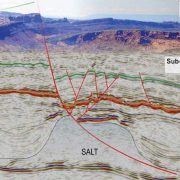
Approximately 27 billion barrels of oil has been extracted from the UK North Sea. Some claim there are 14 billion barrels remaining to be exploited, but of those, nearly 6 billion barrels are classified as “Yet to Find”. Recently, we’ve been finding them in 10 to 15 million barrel increments, suggesting it might take some 38 years to find them all, by which time the North Sea’s infrastructure will be well and truly rusted away. How might we speed up the rate of new discoveries through the application of new technologies, and perhaps more importantly, by going back to basics and doing better geology?
Phil Richards worked as BGS Regional Hydrocarbons Manager, and has over 30 years of world-wide experience of oil exploration experience, specialising in creating the technical conditions necessary for inward investment in hydrocarbon exploration in developing basins. He has published over 50 papers on geology relating to oil and gas exploration.

Volcanoes have played a major role in the creation of Scotland’s geology. The most recent examples on the west coast are a mere 60 million years old, but rocks composing many of the famous Scottish landforms such as Glencoe are the direct result of earlier episodes of volcanism. Volcanoes and the Making of Scotland will explore back in time from the most recent examples to volcanoes of the obscure Precambrian times which left their signature in the ancient rocks of the far north-west.
Brian Upton is a Distinguished Fellow of the EGS and is Emeritus Professor of Petrology and Senior Honorary Professorial Fellow in the School of Geosciences of the University of Edinburgh. The comprehensively-revised second edition of his highly-acclaimed book Volcanoes and the Making of Scotland has recently been published and has been enthusiastically reviewed.
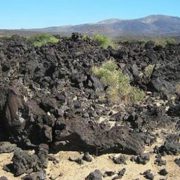
The next lecture of the Edinburgh Geological Society’s winter series will take place on Wednesday 9 November at 7:30pm in the Hutton Lecture Theatre at the Grant Institute of Geology, King’s Buildings, Edinburgh, when Dr Charlotte Vye-Brown, BGS Scotland will talk about Volcanic Hazards. Of all the natural hazards, volcanic hazards are unique in the sense that there are many hazards associated with, and produced by, any single volcano that can have impacts hundreds or even thousands of kilometres away. Globally, an estimated 800 million people live within 100 km of a volcano that has the potential to erupt. There remain significant challenges to understand volcanic risk and assist with disaster mitigation. These challenges are pronounced in Africa due to significant knowledge gaps, lack of real-time monitoring, uncertainty, limited early warning capacity and pressure on resources. This talk will focus on recent research in Ethiopia on understanding the periodicity and character of past eruptions, identifying potential impacts, and evaluating future threat.
Charlotte Vye-Brown is a senior volcanologist with BGS in Edinburgh, working on projects on rift volcanism, particularly in East Africa; the volcanic history of the Ascension Islands; and emplacement and eruption styles of flood basalts.
The meeting will be followed by tea and biscuits in the Cockburn Museum of the Grant Institute, to which all are invited.

Tim Kearsey is a survey geologist and sedimentologist with BGS in Edinburgh. He has research interests in Palaeozoic stratigraphy and sedimentology; palaeosols and palaeo-environmental reconstruction; and geostatistics. In June 2015 he was joint leader (with David Millward) of the highly successful EGS excursion to Burnmouth.
The meeting will be followed by tea and biscuits in the Cockburn Museum of the Grant Institute, to which all are invited.
The first evening lecture of the Edinburgh Geological Society’s winter series will take place on Wednesday 12 October at 7:30pm in the Hutton Lecture Theatre at the Grant Institute of Geology, King’s Buildings, Edinburgh, when Prof Patrick Corbett, Heriot Watt University will talk about: Fluvial Channel Reservoirs – 20 years diagnosing their reservoir engineering attributes.
In 1994 the first study was undertaken to collect permeability data from opencast or surface mines in the Ayrshire Coalfields with the specific objective of generating synthetic well test responses. Well tests are undertaken by engineers on making a discovery in a fluvial reservoir to try to understand the lateral extent and size of the reservoir. At that time the tools for doing the simulation were rather simple, the models produced were rather simple and the results looked rather like the expected results in the engineering textbooks at the time. Since then, as the data and understanding have improved, as Google Earth has provided images of fluvial systems across the world, as the simulators became more powerful, the grid blocks smaller and the models much larger, and more well tests have been conducted, we begin to see that the 3-D pressure responses are much more complex. This goes, in some way, to explain why fluvial reservoirs have lower recovery (and therefore higher remaining potential) than many other types of oil reservoir. Twenty-two years later, we are still studying opencast mines in Ayrshire (the Spireslack Mine), building models and trying to understand fluid flow in complex reservoirs.
Patrick Corbett is Professor of Petroleum Engineering at Heriot Watt University and Head of the Carbonates Reservoirs Group. His long-term research interests involve integration of reservoir geoscience, petrophysics, geophysics and reservoir engineering.
The meeting will be followed by tea and biscuits in the Cockburn Museum of the Grant Institute, to which all are invited.
A link to a map of the campus can be found at http://www.edinburghgeolsoc.
Wednesday 22 June
South Queensferry Shore